As artificial intelligence reshapes nearly every sector of the global economy, a growing number of technologists are asking a harder question: not only what AI can optimize, but who it meaningfully serves. Some of the most consequential advances are emerging not from entertainment or convenience, but from efforts to remove long-standing structural barriers to participation.
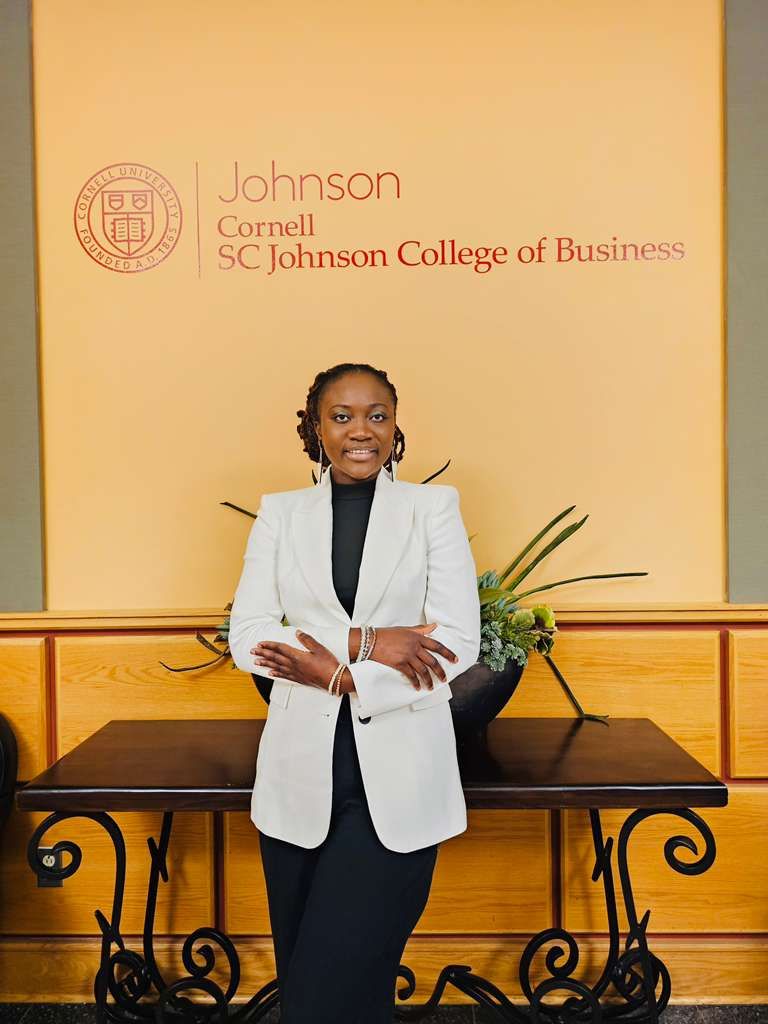
One such effort is Neosignis, an AI-driven communication platform founded by Esther Oyindamola Oyanibi, a Cornell University MBA graduate whose work focuses on real-time, bidirectional communication between spoken language and sign language.
Neosignis is designed to address a persistent challenge across healthcare, education, and the workplace: enabling natural, two-way communication between Deaf, hard-of-hearing, and hearing individuals, including those who communicate primarily through sign language or alternative communication methods without relying exclusively on human interpreters or one-directional captioning tools. The goal is not to replace interpreters, but to expand autonomy, flexibility, and access in moments where traditional support is unavailable, delayed, or impractical.
From Accessibility Gaps to Economic Opportunity
Millions of Americans who are Deaf, hard-of-hearing, or neurodivergent, as well as individuals with diverse communication needs, encounter barriers that affect employment, healthcare access, education, and civic engagement. These challenges are often framed primarily as social issues, but their economic implications are substantial. Communication friction can lead to underemployment, reduced productivity, higher service costs, and missed opportunities for skilled participation across the economy.
Neosignis approaches this challenge through a combination of speech recognition, computer vision, and language intelligence, built to interpret a wide range of communication patterns, including sign language, gestures, facial expressions, and non-standard vocalizations. Rather than reducing interaction to transcription, the platform focuses on preserving conversational intent, context, and reciprocity.
This emphasis on two-way communication reflects a broader shift in accessibility technology from static accommodation toward tools that support independence and real-time participation.

Impact Across Critical Sectors
Healthcare
In U.S. healthcare systems, communication breakdowns are a known contributor to diagnostic errors, delayed treatment, and increased legal risk. Interpreter availability remains uneven, particularly in emergency settings and rural facilities. Neosignis offers healthcare providers a scalable supplemental tool that can improve clarity and responsiveness in patient–provider interactions, while reducing dependence on costly, last-minute interpretation services.
Workforce Participation
Many Deaf and speech-diverse professionals possess in-demand skills but face friction in interviews, meetings, and day-to-day collaboration. By enabling real-time sign-to-speech and speech-to-sign communication, Neosignis supports more inclusive workplace environments, allowing employers to expand their talent pool while meeting accessibility obligations in a way that respects dignity, speed, and professional autonomy.
Education
Educational institutions often struggle to provide consistent communication support across classrooms, campuses, and learning formats. AI-driven tools like Neosignis can help supplement existing resources, supporting engagement and continuity for Deaf and speech-diverse learners and contributing to long-term human capital development.
Scientific and Ethical Foundations
A distinguishing feature of Neosignis is its grounding in peer-reviewed research and interdisciplinary design. Oyanibi is also a published researcher, with work appearing in the World Journal of Advanced Engineering Technology and Sciences (2025), examining how AI-based speech-to-text and gesture-recognition systems can better support autistic individuals with complex communication needs.
The research emphasizes principles reflected in Neosignis’ development approach: resilience to non-standard communication patterns, sensory-aware interface design, inclusive datasets, and ethical safeguards related to privacy, bias, and cognitive load. This foundation positions the platform not only as a technical innovation but as a system intended for real-world deployment in sensitive, high-stakes environments.
Building from the United States, with Global Relevance
With Neosignis incorporated in the United States and backed by early angel investment, the company is positioned to contribute to domestic innovation through the creation of high-skill AI and engineering roles, the development of defensible intellectual property, and participation in the growing market for ethical and inclusive AI systems.
Oyanibi’s background in enterprise strategy and applied research places the company at the intersection of technology development and economic impact aligning accessibility with productivity, inclusion with growth, and innovation with long-term value creation.
A Broader View of AI’s Role
As AI adoption accelerates, its economic influence will be shaped not only by efficiency gains, but by the extent to which it expands participation. Neosignis reflects a broader shift in AI development, where accessibility is treated not as a niche feature, but as core infrastructure for participation across society.
By addressing communication barriers that have historically limited access, Neosignis points toward a future in which inclusive design supports economic resilience, workforce growth, and social progress demonstrating that accessibility-first technology is not only socially responsible, but economically strategic for the United States.